Painting concrete block: why block filler is not optional
Block does not fail because the paint was cheap. It fails because nothing closed the surface first.
September 6, 2026 · 4 min read
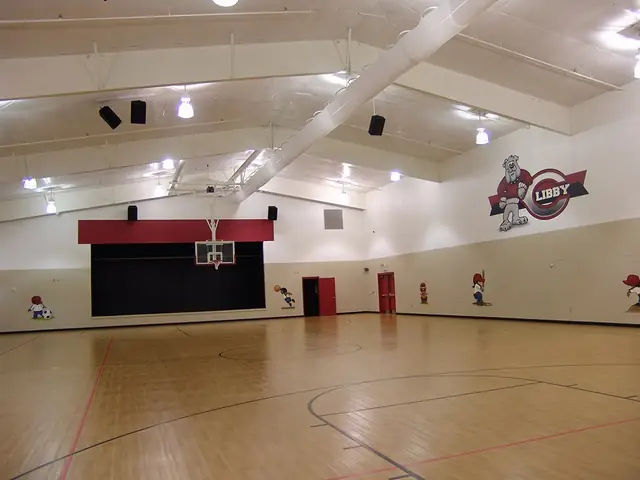
Concrete block is everywhere in East Texas institutional buildings. Schools, gyms, warehouses, civic buildings and plenty of commercial premises are built from it, and it is a genuinely good wall: durable, structural, and cheap to maintain. It is also the surface where painting most reliably goes wrong, and almost always for the same reason.
Block is a sponge with a texture
Two properties make block difficult. The first is porosity. Concrete block is full of open voids, and it will absorb a remarkable quantity of whatever you put on it. Paint applied directly to bare block soaks in rather than forming a film on the surface, which means the coverage you thought you were buying goes into the wall instead of onto it.
The second is surface profile. Block is not flat. It has an open, irregular texture, and a thin coating simply follows that texture rather than smoothing it. The wall ends up looking like painted block rather than like a painted wall, and no amount of additional finish coats fixes it, because each one follows the same profile as the last.
What block filler actually does
Block filler is a heavy-bodied product designed specifically to close that surface. It fills the voids and levels the profile so that what comes next has something continuous to sit on. It is not a primer in the ordinary sense and it does not do a primer's job as well as a primer does. It is a surfacing product.
The result is a wall where the finish coat forms a proper film across a closed surface. That film is what actually delivers the things people want from a painted block wall: a consistent sheen, a color that reads evenly across the whole elevation, and a surface that can be cleaned without the cloth catching on open pores.
What skipping it looks like a year later
- Patchy sheen, where some areas absorbed more than others and now reflect light differently.
- Color that reads unevenly across a long wall, most visible in a gym or corridor where you see the whole run at once.
- Pinholing, where trapped air in the voids leaves small open points across the surface.
- Poor washability, because there is no continuous film to clean, only coating sitting in an open texture.
- Far more coating consumed than the coverage rate suggested, on a job that still does not look finished.
The frustrating part is that this is usually discovered after the fact, when the building is back in use and the light is hitting a wall that nobody is happy with. Correcting it then means filling and recoating an occupied space, which costs considerably more than doing it in the right order the first time.
The right sequence on a block wall
The order is not complicated, but each step depends on the one before it. The wall gets cleaned so that dust, form release residue, efflorescence and any loose material are gone rather than sealed in. Any structural or mortar issues get addressed, because paint is not a repair. Then block filler goes on, worked into the voids rather than merely brushed across them, and given the time it needs to dry properly.
Only then does the finish coat go on, and only then is the coverage rate on the tin something like realistic. In our humidity the drying time between those steps is longer than most schedules assume, and compressing it is how the whole sequence gets undermined.
Choosing the finish for how the wall is used
Once the surface is closed, the finish coat is a normal decision driven by use. A gym wall takes contact all season and wants something durable that can be cleaned. A corridor takes carts and hands. A warehouse wall mostly wants coverage and light reflectance. A restroom may be a case for vinyl wallcovering instead, because a wall cleaned that often will wear a painted film down whatever you specify.
Graphics and murals on block are their own case again. A mascot on a gym wall has to read cleanly from the far bleachers, which means the field underneath has to be flat and even before the graphic is laid out and cut in by hand. Painting a logo onto an unfilled block wall is how you end up with a design that looks correct on the drawing and rough on the wall.
Ace Paint Contracting has been painting block walls in East Texas schools, gyms, churches and commercial buildings since 1988. If you have a block wall that has never looked right, it is usually worth finding out what is underneath the existing coating before deciding what to put on top of it.
Ace Paint Contracting, (936) 637-0557
Call (936) 637-0557More articles
Why exterior paint fails in East Texas, and what actually prevents it
Almost everything that fails on an exterior repaint failed at prep, usually years before the coating gave up.
Drywall finish levels: how to spec the right one for your room
The right level of finish is decided by the light in the room and what is going on the wall, not by habit.