Drywall finish levels: how to spec the right one for your room
The right level of finish is decided by the light in the room and what is going on the wall, not by habit.
September 6, 2026 · 4 min read
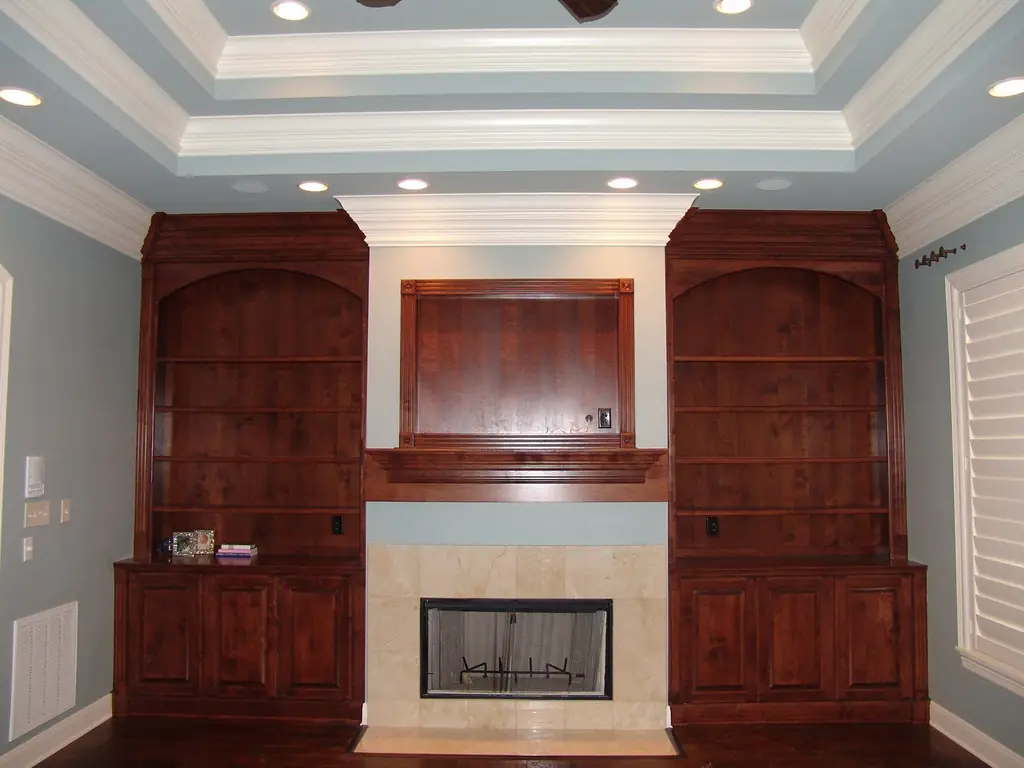
Drywall finishing is not one standard applied everywhere. There is a real range between a warehouse wall that will take a heavy texture and a flat coating, and a living room wall that will be painted in an eggshell and lit from the side by a west-facing window every afternoon. Treating those two rooms the same way guarantees you overspend on one and are disappointed by the other.
Light is the thing that decides it
The single best predictor of how good a wall will look is not how carefully it was finished, it is how light strikes it. Light arriving at a shallow angle across a wall, which is what you get from a window down the same wall or from a fixture washing down it, throws a shadow off every ridge, every fastener dimple and every joint that was feathered a little too narrow.
The same wall, lit from the front by a ceiling fixture in the middle of the room, can hide a surprising amount. This is why a hallway can look perfect and the room next to it can look uneven, even though the same person finished both on the same day to the same standard.
So the useful conversation before any finishing happens is about windows, fixtures and sightlines. Where does the light come from, where will people stand, and which walls will they look along rather than at?
Sheen makes the same wall look better or worse
The second lever is the paint you plan to put on. A flat or matte finish scatters light and forgives a great deal. As you move up through eggshell, satin and semi-gloss, the surface becomes more reflective, and a reflective surface reports every imperfection underneath it.
That creates a genuine trade-off, because the higher sheens are also the ones that clean well. A kitchen or a bathroom wants something wipeable, and wanting something wipeable means committing to a better level of drywall finish underneath it. Choosing a satin on a wall finished for a flat is how people end up unhappy with a paint job that was, strictly speaking, applied correctly.
Where texture genuinely helps
Texture is not a way of hiding poor work, though it does get used that way. It is a legitimate finish choice that changes how a surface handles light and wear, and in a lot of rooms it is the right answer.
- Large open ceilings, where a smooth finish under downlights is unforgiving and expensive to achieve.
- High-traffic corridors and stairwells, where a textured surface disguises the scuffs a building will inevitably collect.
- Rooms being matched into an existing textured house, where a smooth new wall would stand out more than a textured one.
- Commercial spaces where the schedule is tight and a smooth finish would not be achievable to a standard worth paying for.
The part that cannot be rushed
Whatever level you specify, the sequence is the same: tape the joint, mud to fill and build it, float to feather the compound out wide, then texture over the top if the room calls for it. What separates a good result from a poor one is mostly the waiting between those steps.
Compound that is coated over before it has fully dried will shrink underneath and crack later. In our humidity that drying takes longer than a lot of schedules assume. Sanding a joint that has not properly cured tears the surface rather than smoothing it, and you find out about that when the paint goes on and the light hits it.
There is no honest way to compress this. A crew that rushes the drying is buying a callback and buying the owner a wall that cracks in its second year.
Repairs are the hardest finishing of all
Patching an existing wall is harder than finishing a new one, because the target is already there beside you. A knockdown, an orange peel, a hand-troweled finish and a stipple all read differently, and within each of those there is a spread rate and a knife pressure that whoever did it originally used without writing it down anywhere.
Making a patch disappear means reading the surrounding wall, mixing to that consistency, and testing on a board rather than on your ceiling. It usually also means feathering the repair wider than the damage strictly required, because the eye finds a hard boundary between two textures much more easily than a gradual one. Done properly, nobody can point at where the hole was, and that is the entire standard for the job.
Ace Paint Contracting has been doing drywall finishing around Lufkin since 1988, on both residential and commercial rooms, and free digital estimates are available if you want a number before committing.
Ace Paint Contracting, (936) 637-0557
Call (936) 637-0557More articles
Why exterior paint fails in East Texas, and what actually prevents it
Almost everything that fails on an exterior repaint failed at prep, usually years before the coating gave up.
Painting a school, church or clinic that cannot close
The scheduling is part of the trade, not an inconvenience attached to it.